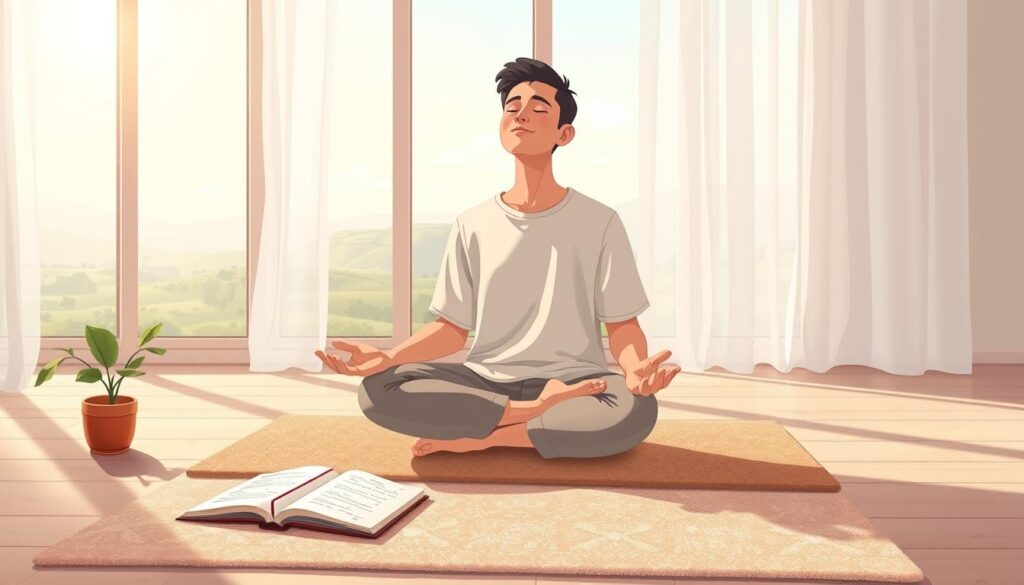
Self awareness is key to lasting personal growth. Start with simple routines like mindfulness checks and daily body scans. These help reduce stress and notice mental patterns with self awareness practices.
Pair these with methods like Pattern Mapping and 30-Second Values Checks. This way, you can spot triggers and align actions with your values.
Balance solo reflection with feedback from trusted peers or self-assessments. Use exercises like SMART goal-setting and nightly values reflection. These turn awareness into progress.
Use tools like The Mindfulness App or guided programs to deepen your practice. This helps sustain change.
For a proven approach, try nextself.ai. It offers clear, research-backed methods for mindfulness and emotional intelligence. Its assessments and exercises help you grow steadily.
Understanding the Importance of Self Awareness
Self awareness is key to making changes on purpose. It helps you notice your feelings, body signals, thoughts, and values right now. By taking mindful pauses and reflecting, you can choose actions that align with your values.
Defining Self Awareness
Self awareness has several parts. It includes knowing your values and passions, understanding how others see you, being present in the moment, and knowing your role in groups. Each part has its own role.
Knowing yourself helps you make true choices. Seeing how others view you shows you blind spots. Being mindful helps you pause before reacting. And understanding group dynamics helps you make better decisions in teams.
Benefits of Being Self Aware
Practicing self awareness helps you manage your emotions and feel less stressed. By naming your feelings and checking in with your body, you can calm down faster. This helps you see patterns and change habits that don’t help you.
Being self aware in all areas improves your relationships and work performance. It helps you set clear goals and bounce back from setbacks. It also makes you a better communicator and builds trust with others.
How Self Awareness Influences Decision-Making
Mindfulness creates small pauses that help you make choices based on your values. Science shows that recognizing your emotions and thoughts helps you control your reactions. Small exercises, like a 30-Second Values Check, keep you focused on your long-term goals.
Using self discovery and setting goals turns insight into action. Break down big goals into smaller steps. Understanding your unconscious motivations helps you make choices that align with your goals.
Practical Self Awareness Practices to Implement

Start with simple habits that build self reflection. Daily checks and nightly reflections show patterns in decisions and triggers. These habits help in self care and personal growth.
Journaling for reflection
Write down decisions, triggers, and emotions every night. Use the Thought Stream Technique to track thoughts and feelings. Add Values Clarification prompts to sharpen self discovery.
Mindfulness meditation techniques
Do short meditation sessions to notice emotions and thoughts. Use apps like The Mindfulness App to guide you. Set reminders to pause and be present.
Seeking feedback from others
Ask for specific feedback from colleagues or friends. Use the Feedback Integration method to reflect on feedback. Track defensive reactions with the Micro-Pause Technique.
Engaging in self-assessments
Do monthly self-awareness audits to rate your awareness. Track interactions and behavior to gather data. Use SMART goals and resilience measures to monitor progress.
- Use journaling to convert insights into action steps and to log progress on personal growth exercises.
- Pair short mindfulness moments with habit stacking to sustain mindfulness techniques in daily life.
- Build emotional intelligence strategies by integrating feedback and mapping response patterns.
- Employ quick in-day self checks and nightly reflections as lightweight self discovery methods.
Overcoming Challenges in Cultivating Self Awareness
Self awareness faces common hurdles: acting on autopilot, lacking words for emotions, and poor body awareness. Stress can also narrow our view. Old habits and early mindfulness can bring up uncomfortable feelings.
Practical barriers include weak goals, neglecting sleep or nutrition, and lacking social support. These make it hard to keep up with self reflection and development.
Identifying Barriers to Awareness
First, identify common blocks. Notice when you react without thinking, when you struggle to find the right words for feelings, and when stress limits your view. Use quick body scans and nightly reflections to spot patterns.
Track these findings with simple methods and exercises. This way, issues become clear instead of hidden.
Strategies for Improving Self Perception
Try micro-practices like short breath checks and sensory check-ins. Use the Thought Stream Technique to catch automatic thoughts. Build your emotional vocabulary by naming feelings exactly.
Set SMART goals, break them into small steps, and add new routines to your self care. Monthly self-audits and integrating feedback help balance internal insight with external impact.
The Role of Emotional Intelligence and Celebrating Growth
Emotional intelligence helps by recognizing, understanding, and managing emotions. It reduces reactivity and builds resilience. Mindfulness calms the amygdala, making it easier to respond deliberately.
Track progress with measurable milestones and short rituals to celebrate wins. Acknowledge consistency and better relationships as signs of growth in self development and reflection.